Strength training techniques: how to build strength more effectively
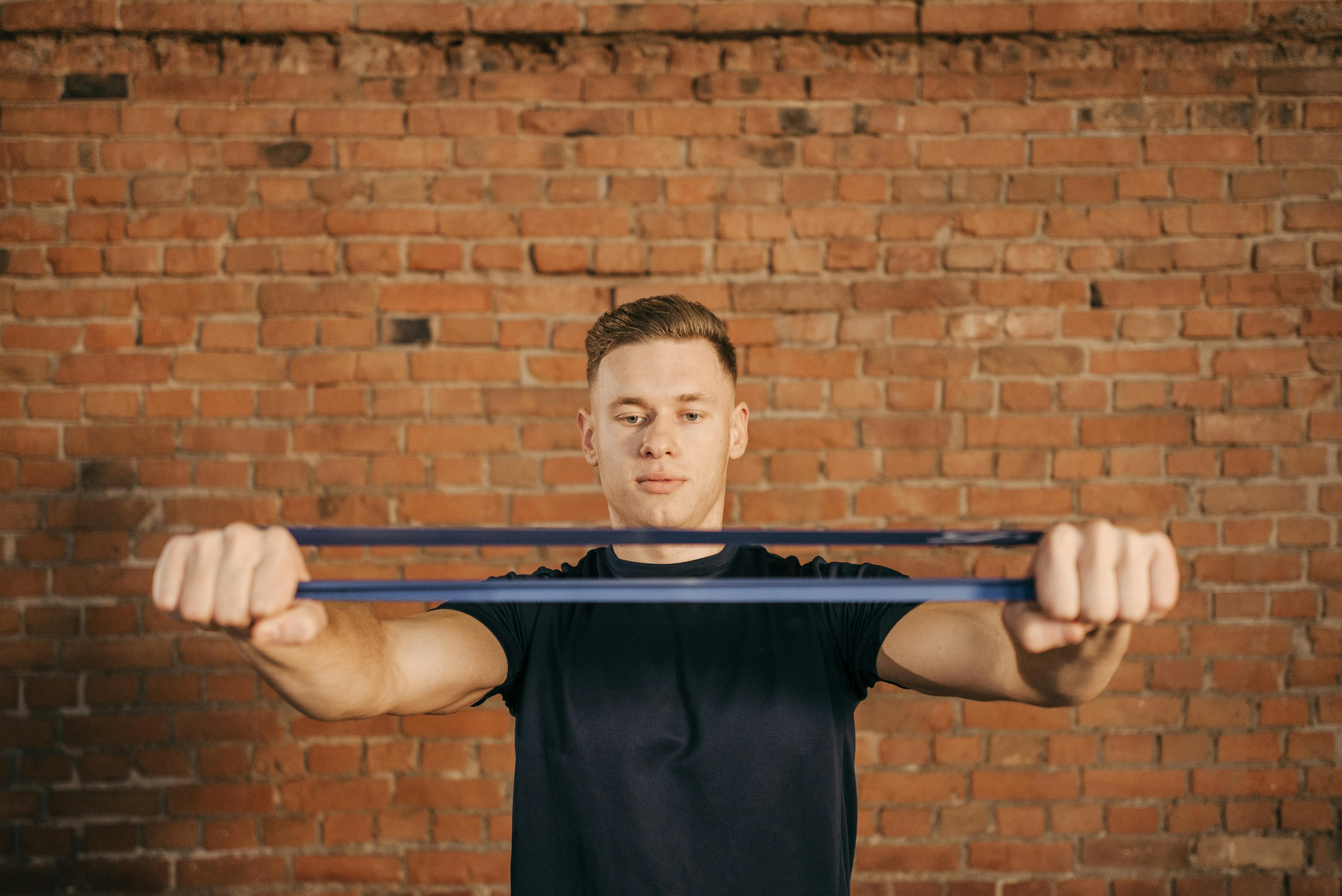
Strength training is often associated with lifting heavier weights or increasing the number of repetitions. While these approaches can be effective, they are not always the most efficient way to build strength.
At Broadstone Movement Clinic, we take a more structured approach to resistance training. As chiropractors and physiotherapists, our focus is not just on building strength, but on helping individuals move well enough to train consistently and without unnecessary setbacks.
In this blog, we explore a lesser-known strength training technique called accommodating resistance and how it can be used to improve muscle and strength development, particularly in exercises such as press-ups.
What is accommodating resistance?
Accommodating resistance is a strength training method that adjusts the difficulty of an exercise throughout the movement, rather than keeping it constant from start to finish.
In most resistance-training exercises, strength is not evenly distributed throughout the full range of motion. There are typically positions where the movement feels significantly more challenging, and others where it becomes relatively easier.
To address this, accommodating resistance focuses on two key principles:
increasing the challenge where you are mechanically stronger, allowing the muscles to continue working hard even when the movement would normally feel easier
reducing the difficulty slightly where you are mechanically weaker, so that the movement can be completed with control rather than compensating or stopping early
By applying these principles, each repetition becomes more consistent in effort, which can lead to more effective strength development over time.
Why use accommodating resistance for strength training?
When building strength, one of the most common limitations is that an exercise is dictated by its weakest point. This means that large portions of the movement are often underloaded and do not fully contribute to strength development.
In clinical practice, we use accommodating resistance to address this imbalance and improve the effectiveness of a movement's challenge to the body.
This approach allows us to:
- increase muscle engagement across the full range of motion, ensuring that no part of the movement becomes passive or under-challenged
- reduce unnecessary repetition volume, as each repetition carries a higher training stimulus and therefore requires fewer total reps
- support more efficient strength gains, particularly for individuals who are training around time constraints or returning from injury
For many people, this creates a more sustainable and effective way to build strength without relying purely on increasing weight.
How accommodating resistance works in practice
To apply accommodating resistance effectively, the key is to adjust the movement rather than simply repeating it in a fixed way.
In practice, this involves manipulating factors such as body position, leverage, or load throughout the repetition.
We guide patients and clients to focus on:
- actively shifting body position during the movement, which changes how much load is placed through the working muscles at different points
- using control to manage the most challenging parts of the range, rather than rushing through them or avoiding them entirely
- adjusting effort in real time, based on how the movement feels rather than following a rigid structure
This creates a more responsive and intelligent approach to resistance training, where the individual is working with their current capacity rather than against it.
Applying accommodating resistance to press-ups
Press-ups are highly effective bodyweight exercises and a key part of many strength-training programmes. They also provide a clear example of how accommodating resistance can be applied in a practical setting.
From a clinical perspective, press-ups are particularly useful because they can be easily adjusted to suit different strength levels while still maintaining a consistent movement pattern.
Incline press-up progression
For those earlier in their strength training journey, an incline press-up provides a controlled starting point that reduces overall load while still allowing progression.
When applying accommodating resistance in this position, we focus on how body weight is distributed:
- Shifting the body weight forward increases the load through the upper body, making the top portion of the movement more demanding, where it would otherwise feel easier
- Easing the body weight slightly back reduces the load when approaching the bottom position, allowing the movement to be completed with control rather than strain
- Maintaining a straight body line throughout ensures that the load is transferred effectively, rather than being lost through compensatory movement
This approach allows the individual to challenge themselves appropriately without losing movement quality.
Knee press-up progression
Knee press-ups are often used as part of a structured press-up progression, allowing individuals to build strength while managing overall intensity.
When incorporating accommodating resistance, we encourage:
- gradually shifting the body forward to increase intensity through the arms and chest, particularly during the easier phases of the movement
- adjusting position slightly if control is lost, rather than forcing the repetition and compromising the technique
- Reapplying load as strength allows, ensuring that each repetition remains challenging but achievable
This creates a more consistent stimulus and helps build strength in a controlled and progressive way.
Full press-up progression
In a full press-up, accommodating resistance becomes a powerful tool for increasing intensity without adding external load.
At this stage, we guide individuals to focus on:
- Shifting the body weight forward as they lower themselves, increasing the demand on the upper body during the descent
- Resisting gravity through a controlled lowering phase, which is often where the greatest strength adaptations occur
- Adjusting position slightly if needed to complete the repetition, rather than stopping the movement altogether
- Reintroducing load as they press back up, ensuring that the entire movement remains challenging
This results in a significantly more effective repetition compared to performing the movement in a fixed position.
How many repetitions and sets should you do?
Because accommodating resistance increases the intensity of each repetition, the total training volume can be reduced without compromising results.
In practice, we often structure this type of training as follows:
- Performing around 2 sets of 3 repetitions allows for high-quality, high-effort work, without excessive fatigue affecting movement quality
- Alternatively, completing a single set of up to 5 repetitions can be effective, provided each repetition is performed with control and intent
- Ensuring each repetition is close to maximum effort helps drive adaptation, rather than completing higher volumes of lower-quality work
This approach prioritises quality over quantity, which is particularly important when building strength safely.
The importance of rest and effort in resistance training
When training with high effort, recovery between repetitions becomes an important part of the process. We often see that insufficient rest can reduce the effectiveness of each repetition, as fatigue limits the ability to apply force and maintain control.
To support this, we recommend:
- Allowing at least one minute of rest between repetitions, so that each effort can be performed at a high standard
- Spreading repetitions throughout the day where appropriate, which can help maintain intensity without accumulating fatigue
- Approaching each repetition with intent and focus, rather than treating them as part of a continuous set
This ensures that each repetition contributes meaningfully to strength development.
A more effective approach to building strength
Building strength is not solely about increasing load or volume. In many cases, improving how a movement is performed can have a greater impact on results.
By applying accommodating resistance, individuals can:
- Increase the effectiveness of each repetition without needing additional equipment, making it a practical option for home or gym training
- Develop strength through a fuller range of motion, which supports both performance and resilience,
- Train in a way that is adaptable to their current ability, reducing the risk of overload or injury
This aligns closely with our approach at Broadstone Movement Clinic, where we help people move better so they can train how they want, with confidence and consistency.
If you are unsure how this looks in practice, the video below walks you through applying accommodating resistance to a press-up. You will see how small changes in positioning can make each part of the movement more effective without needing additional weight.
Need guidance with strength training?
If you are looking to improve your strength, refine your movement, or return to training after injury, having the right guidance can make a significant difference.
At Broadstone Movement Clinic, we combine clinical expertise with practical strength training principles to help you build strength safely and effectively.
Our focus is not just on reducing pain, but on helping you move well enough to train consistently and achieve your goals.
Take the next step towards recovery
If you are experiencing pain, stiffness or changes in mobility, our team can provide a thorough assessment and clear treatment plan.